An aging wastewater liftstation is located in a municipal. Pumps are nearing the end their useful life, while controls require modernization and the access hatch must be replaced. Although the concrete wetwell appears structurally sound, it needs to be upgraded.
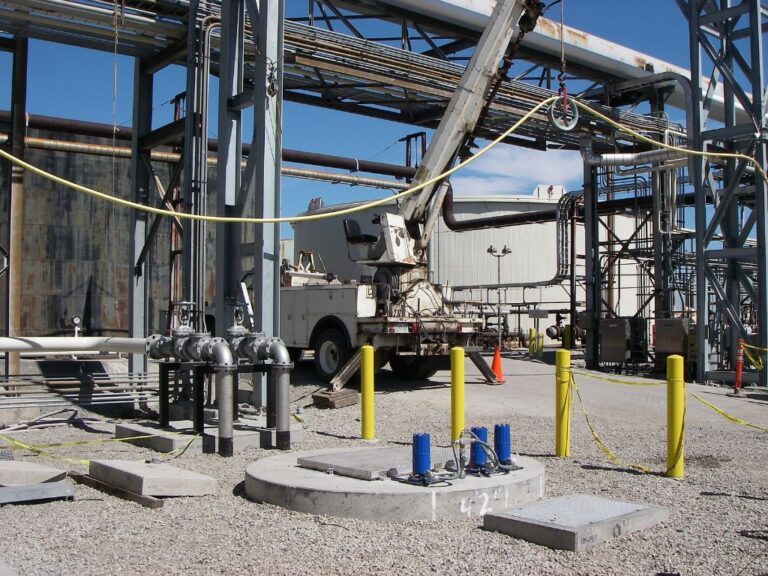
Image credit: romtecutilities.com
Should the station be totally gone? Not necessarily. The more important question to consider is whether or not the existing infrastructure will support an efficient pumping system that is in line with the latest standards, without compromising reliability or capacity.
Retrofitting the pumping station precisely designed can help save infrastructure and also replace parts that are no longer in compliance with functional requirements.
Start with the Structures Nobody Wants To Replace
Wet wells are often the most expensive and difficult element to replace because they are constructed underground and attached to existing pipes, and essential to the collection of wastewater.
Retaining the concrete structure could decrease excavation and construction work.
However, deterioration near the access hatch could affect the decision. Romtec Utilities identifies wet well hatch replacement as a common retrofit requirement. It is possible to be more durable to repair the top slab rather than attach a new hatch onto deteriorated concrete. This will allow for greater access to the structure and prolong its utility, without having to replace the entire structure as well.
A more powerful pump alters the Engineering
Think about a community that has experienced a significant increase since the opening of its lift station. It’s possible that current pumps aren’t sufficient to handle the increasing wastewater flow.
Pumps with greater horsepower can be used to upgrade a pumping station, but the equipment must also fit into the system. Pumps with greater horsepower could require adjustments to the discharge elbows and pipes and electrical controls, valves, and other components.
Engineers also need to evaluate the requirements of the hydraulic system, including flow and total dynamic head. If you decide to install a larger pump without considering these factors the system could cause operational issues rather than solve the problem. Making plans for future capacity in the initial design can simplify future expansion.
Make sure that the Wastewater is moved during Construction
A wastewater pump station retrofit introduces a challenge that ordinary equipment replacement projects may not face: the station may need to remain operational throughout construction.
Contractors are still working, and wastewater continues to come in. According to the plan, a temporary bypass pumping system is required to ensure service is maintained as the old equipment is removed, or new components are added.
Romtec Utilities tackled this type of challenge in the Federal Law Enforcement Training Center in Brunswick, Georgia.
The project consisted of replacing two old wastewater lift stations in the process of maintaining operation at the facility. Site-specific engineering and packaged replacement systems and bypass pumping strategies were used to allow for the station’s footprints as well as operational demands. This case illustrates why the sequence of construction must be considered carefully prior to installation.
If replacing is the only option
Each station is not able to be repaired. Sewer lift stations might need to be rebuilt in the event of a badly damaged wet well or a lack of capacity for structural strength.
The decision should account for structural condition, equipment compatibility, construction access along with service continuity and long-term operational requirements. Romtec Utilities begins retrofit and replacement projects by identifying which components will be retained and which require replacement.
From there, the business creates engineering solutions that are specific to the site including preliminary designs, as well as budgetary estimates. Prefabricated components are also able to help facilitate installation and cut down on building requirements that are required on-site.
The project won’t be finished until the pumps are turned on
The modern lift station needs to operate as a system. Prior to returning the lift station to service, testing the startup and commissioning can help to ensure that the pumps, controls and other equipment perform as per the approved design.
Maintenance and operation manuals along with instruction for operators are crucial. Maintenance staff must understand the latest equipment, operating procedure, and documents before they can assume responsibility for the station.
A successful retrofit preserves the infrastructure while still addressing the issues that made modernization necessary.
Municipalities and facility owners must look beyond immediate repair. The most successful project is one that integrates the new equipment with existing structures, keeps up with essential service throughout construction and also prepares the pumping system for years of continual operation.