Picture your regular lunchtime sandwich. With a couple of bread slices, your favourite filling and maybe some mayonnaise, you have lunch. What changes if you want to reduce the carbs in your diet?
You may not need to change the filling at all; replacing the bread could make a meaningful difference. For anyone exploring lower-carbohydrate diets, understanding what goes into those two slices is a useful place to start.
Why Compare Bread by the Sandwich?
Searching for the lowest bread carbs can lead to confusing product comparisons. Some loaves advertise carbohydrates for each slice, while others highlight figures per 100g. A more practical approach is to consider the amount you normally eat. If you typically prepare a two-slice sandwich, calculate the carbohydrate content of the full bread portion before adding the filling.
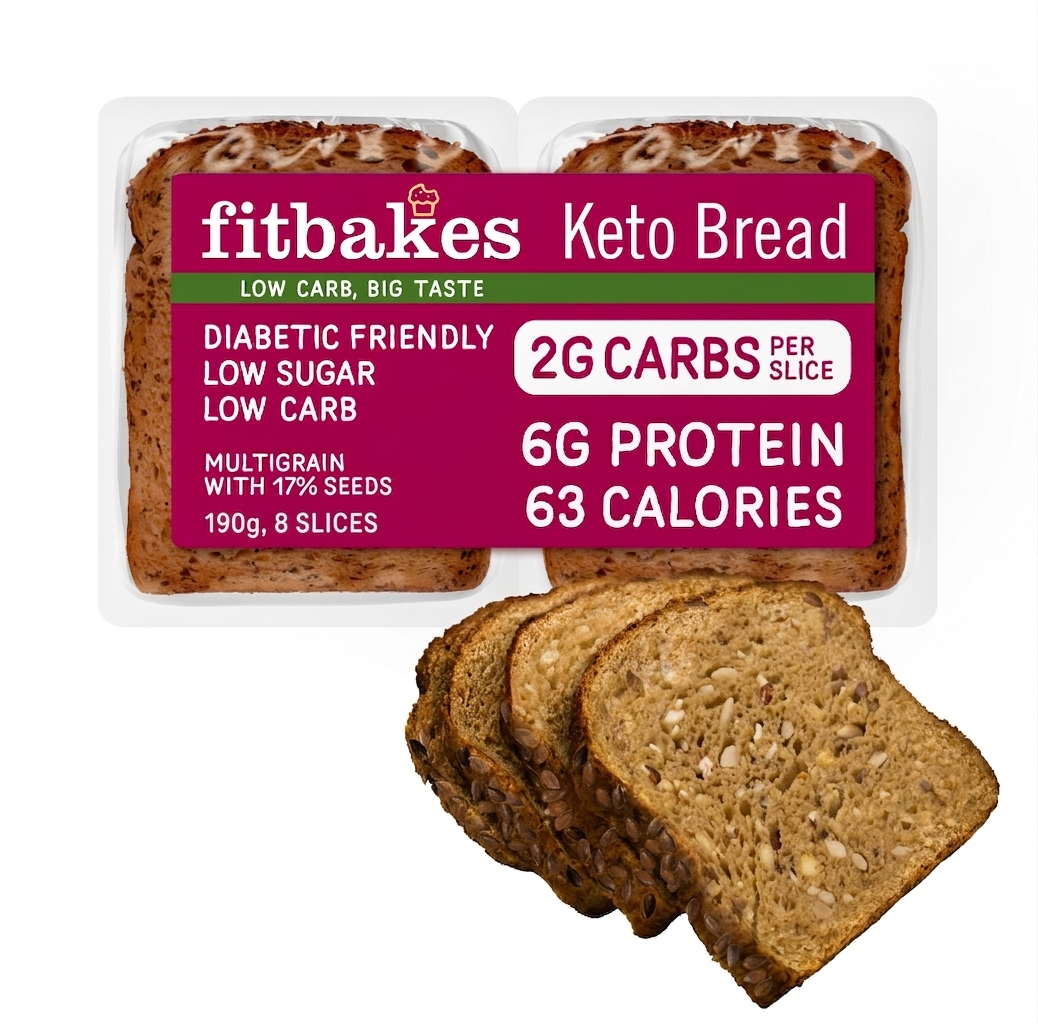
Image credit: fitbakes.co.uk
Comparing the amount you actually eat gives a more useful basis than relying on a headline claim. According to its marketing, Fitbakes Seeded Low Carb Loaf provides 0.8g net carbohydrates in each slice, or about 1.6g net carbohydrates in a two-slice serving. The item page additionally mentions 2g carbohydrates; review the latest nutritional label before relying on a particular amount.
Understanding the Difference With Keto Bread
The conversation around bread and keto often focuses on whether bread should be avoided entirely. Starch is a substantial source of carbohydrates in traditional wheat bread. Keto-friendly alternatives use different formulations to provide a bread-like experience with fewer carbohydrates.
However, the term keto-friendly does not automatically mean a food product contains zero carbs. Your total intake also depends on portion sizes, spreads, sandwich fillings and other food throughout the day. A lunchtime sandwich made with lower-carb bread may make it easier to plan the rest of your lunch.
Looking Beyond Carbs: Seeds and Protein
There is more to choosing a loaf than checking carbs. According to Fitbakes, the seeded loaf contains 7g protein in each slice and 17% seeds, among them sunflower seeds and golden linseeds. Its manufacturer-reported energy value is 63 calories in a single slice. Seeds contribute a distinctive taste and texture, while protein is an important nutrient for normal body maintenance.
A comparison of bread with low carbohydrates should also include ingredients and any declared allergens. The lowest carbohydrate number does not necessarily make a food product suitable for all dietary needs.
Can Low-Carb Bread Still Make Good Toast?
People sometimes wonder whether lower-carb alternatives can taste good. Compared with ordinary supermarket bread, some carb-conscious loaves feel different. The manufacturer suggests putting its Seeded Low Carb Loaf in the toaster for a nutty, golden result. Try serving it with scrambled eggs for breakfast or preparing an open sandwich with avocado, tomatoes, and your preferred seasoning.
Bread with low carbs may also accompany soup or provide a convenient base for a speedy midday meal. Keeping familiar meals in your routine can be useful to you adjust your diet without changing everything at once.
What to Check on the Nutrition Label
To understand carbs in low carb bread, read beyond the front label. Review the serving size, carbs, protein, fibre and the list of ingredients. UK nutritional labels generally report carbohydrates separately from fibre, whereas some international products use different conventions.
If a manufacturer advertises net carbohydrates, check how that figure relates to the full nutritional information. Products with varying slice sizes are easier to assess when you consider the full label.
A Simple Approach to Lower-Carb Meals
Eating fewer carbs need not mean abandoning your favourite meals. Replacing conventional bread with a suitable alternative may allow you to continue preparing your usual morning and midday meals while adjusting your carbohydrate intake.
One example is Fitbakes Seeded Low Carb Loaf, which pairs a seeded recipe with reported low carbohydrate and high protein content. The most suitable loaf is one that works for your diet, tastes good to you and suits your regular meals.